

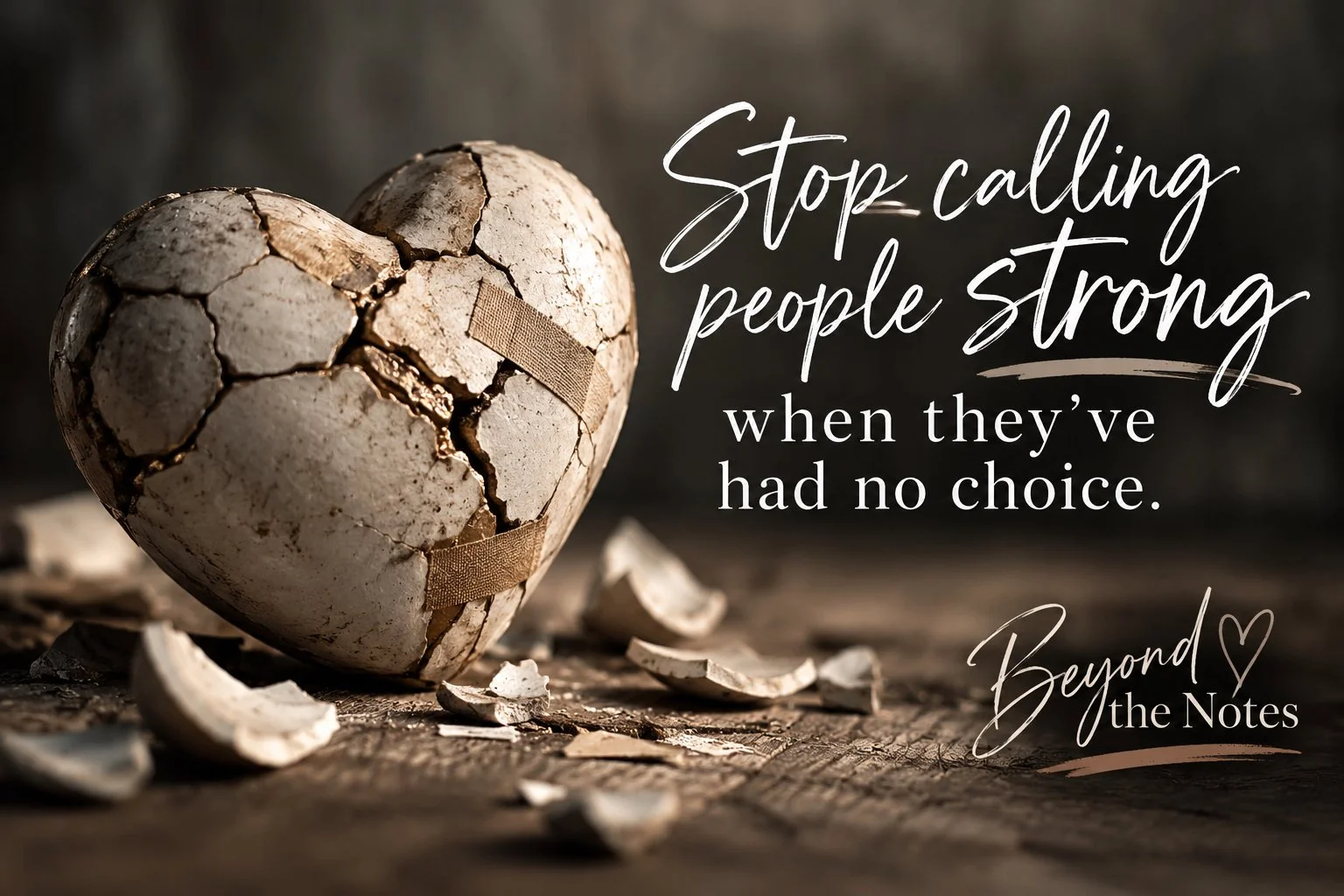
I’m getting tired of hearing people being called “strong” just because they have managed to survive things that should never have happened to them in the first place. We have somehow created a world where watching someone struggle, suffer, lose everything they worked for, or fight their way through one awful situation after another, is seen as something to admire. People tell them how brave they are, how well they’re doing, and how they don’t know how they manage to keep going. But very few stop to ask if that person ever wanted to be strong, if they are actually coping, or if they have reached a point where they can’t take much more.
Because sometimes, being strong has absolutely nothing to do with courage. Sometimes it means you have bills that need paying, people who depend on you, responsibilities you can’t walk away from and a life that carries on regardless of whether you are physically or mentally capable of keeping up with it. Sometimes it means getting out of bed when your body is screaming at you to stay there, putting on clothes when you have spent the night crying, and answering messages from people who have no idea how much effort it takes just to hold a normal conversation. And somehow, because you managed to get through another day, somebody decides that you must be doing alright.
No. You are not doing alright. You are surviving. There is a difference, and it is about time people started understanding it.
I often wonder what the world would look like if we stopped praising people for how much suffering they can put up with and start questioning why they have been left to deal with so much in the first place. Why do we admire the person who works through serious illness rather than asking if they have been given enough support to recover? Why do we tell someone who has lost their financial security that they are incredibly brave for starting again, instead of recognising how frightening it must be to have their future taken out of their hands? Why do we applaud people for holding everything together when there are obvious signs that things are falling apart?
The truth
The truth is that being called strong can sometimes feel like another burden being placed on your shoulders. It becomes something people expect from you. You have dealt with difficult things before, so everyone assumes you will deal with whatever comes next. You have survived worse, so apparently this should be manageable too. You have always found a way through, so why would this time be any different? But nobody seems to consider what all these previous battles have already taken from a person.
People don’t have an endless supply of strength. You can’t keep taking pieces of somebody’s confidence, health, happiness and security and expect them to remain the same person. There is only so much pressure a human being can carry before it starts affecting other parts of their life.
Their sleep changes. Their patience gets shorter. They stop enjoying things they once loved. They struggle to make decisions that used to be straightforward. They withdraw from conversations because they don’t have the energy to explain themselves anymore. Sometimes they become angry, not because they are unpleasant people, but because they are exhausted from trying to cope with circumstances that never seem to improve. And then people start asking why they have changed.
Of course they have changed. What did you expect?
You cannot expect someone that goes through years of pain, worry, disappointment and uncertainty and expect them to walk away untouched. You cannot repeatedly let someone down and then act surprised when they struggle to trust people. You cannot expect someone to keep everything they have when they have reached a point where there is barely anything left to give. Yet, we do exactly that, and then we dress it up as strength.
I think we need to be far more careful about the way we speak to speak who are suffering. Telling someone they are strong is not always a bad thing. Sometimes it is said with genuine love, respect and admiration, and that should not be dismissed. But when those words are used instead of offering help, listening properly or acknowledging how serious a situation has become, they can feel completely empty.
Imagine telling someone who is struggling with a long-term illness how strong they are, while they are quietly wondering how many more years of pain they are expected to put up with. Imagine praising someone for carrying on after losing their job, while they are terrified about paying the rent or putting food on the table. Imagine telling someone who is mentally exhausted that they an inspiration, while they’re sitting alone at night trying to work out how they’re going to face another day.
What exactly are those words supposed to fix? They don’t pay the bills. They don’t take away physical pain. They don’t make an employer treat someone fairly, repair a broken relationship or give a person back the confidence they’ve lost. They might offer a moment of comfort, but they aren’t a replacement for real support.
And that is what I think so many people are missing.
There are people walking around right now who have become so used to dealing with everything themselves that asking for help feels harder than carrying on alone. Not because they want to be independent or because they enjoy proving how much they can manage, but because experience has taught them that depending on other people can lead to even more disappointment. They have heard the promises, accepted the offers of support and trusted people who assured them they would be there when things become difficult. Then, when things actually did become difficult, those people were nowhere to be found.
After a while, you stop asking.
You stop telling people when you’re having a bad day. You stop explaining why you are struggling. You stop expecting anyone to notice when something is wrong, and you learn to answer the question “Are you okay?” with the same automatic response because explaining the truth feels pointless.
“I’m fine.”
Two words that can hide an awful lot. And when someone has spent years answering that way, it becomes easy for everyone around them to believe it.
I also think expecting people with long-term health conditions to be positive all the time, is unfair. There seems to be this idea that if someone is living with an illness, they should approach it with determination, hope and a smile on their face. They should share their journey, celebrate their achievements and inspire other people with their ability to carry on. But what about the days when there is nothing positive to say?
What about the anger of waking up in pain again, having another appointment, receiving another disappointing result or missing another event because your body won’t allow you to take part? What about watching other people make plans without having to consider whether they will physically managed to get out of bed that morning? What about the guilt of cancelling something you desperately wanted to do, knowing that someone else may not fully understand why? There is nothing inspiring about someone being left to deal with those feelings without enough support. It is a difficult reality that deserves to be understood rather than turned into another story about bravery.
And I want to make something very clear. People are allowed to be angry about what has happened to them. They are allowed to feel sorry for themselves sometimes. And allowed to say that life is unfair, that they’re fed up, that they’re frightened, and that they don’t want to deal with another problem.
It doesn’t make them weak. It makes them human.
We need to stop expecting every painful experience to come with a positive lesson. Not everything happens for a reason. Not every struggle makes somebody stronger. Sometimes terrible things happen to decent people, and the only thing they gain from the experience is pain, lost time, damaged trust and memories they would rather not have. Sometimes there is no beautiful ending waiting around the corner. Sometimes people are just trying to get through what is happening to them right now.
One thing that really bothers me is how quickly people can disappear when someone stops being the version of themselves everyone is comfortable with. When they are smiling, laughing, helping other people and pretending everything is fine, they are wonderful people to be around. But when they become withdrawn, upset, frustrated or unable to give everyone the attention they once did, suddenly they are difficult. They are negative. They’ve changed. They’re not the person they used to be.
Has anyone ever stopped to consider that perhaps they are grieving the person they used to be as well?
They might miss the days when they could wake up without worrying about their health. They might miss having the confidence to make plans, the energy to enjoy their hobbies or freedom to go somewhere without thinking about what could go wrong. They might miss their old personality, their patience and the way they used to laugh without feeling guilty about something else they should be doing.
And while everyone is busy telling them to stay strong, they are desperately trying to understand how their life became so different.
Side of survival.
There is also a side of survival that people rarely want to talk about. The resentment. The jealousy. The anger of watching other people carry on with ordinary lives while yours feels like a constant battle. you can be genuinely happy for someone else’s success and still feel devastated that your own circumstances are so different. You can love the people around you and still feel disappointed when they fail to understand what you’re going through. You can be grateful for what you have and still be furious about everything you’ve lost. Those feelings can exist together. They don’t make somebody selfish or ungrateful.
And perhaps that is why the word strong can sometimes hurt more than people realise. Because while everyone else sees someone who keeps getting back up, that person might only see how many times they’ve been knocked down. While others admire their determination, they might be wondering why they’ve had to fight so hard for things other people receive without a second thought.
No-one should have to earn kindness by proving how much pain they can tolerate.
No-one should have to reach breaking point before their struggles are taken seriously.
And no-one should feel guilty for admitting that they cannot keep carrying everything alone.
Ask
Listen
Promises
Don’t Assume.
I wish people would spend less time telling others how strong they are and more time showing them that they don’t always have to be. Ask them what they need. Listen when they tell you something is wrong. Don’t make promises you have no intention of keeping. Don’t turn every difficult conversation into a speech about staying positive. And please, don’t assume that because someone managed yesterday, they will automatically manage tomorrow.
Sometimes the most helpful thing you can say to somebody is not “You’re so strong.”
It is “I can see how much you’re struggling, and I want to help.” and then actually mean it.
Because the truth is that some people aren’t strong in the way the world like to imagine. They are tired, frightened and angry. They’ve lost confidence in themselves, they are struggling to recognise their own lives, and they are carrying feelings they would never wish on anybody else.
They’ve just reached a point where stopping doesn’t feel like an option.
So the next time you look at someone who has been through an awful lot and feel tempted to tell them how strong they are, think about what those words actually mean. Think about what that person might have had to sacrifice just to be standing in front of you. Think about the things they have never told you, the nights they’ve spent worrying, the tears they’ve wiped away before anyone could see them and the times they’ve desperately needed somebody else to take some of the weight. And instead of admiring how much they can carry, perhaps ask why they’ve been carrying it alone.
Because surviving something you never asked to go through is not always strength. Sometimes it is the only choice you have been left with and quite frankly, some of us are sick and tired of being strong. We just want a chance to live without having to fight our way through every single day.
BTN.
